ബ്ലോഗ്

  • Guna Milan vs Mangala Dosha — What’s the Difference?

    ഗുണ മിലനും മംഗള ദോശയും — എന്താണ് വ്യത്യാസം?

    കുടുംബങ്ങൾ വിവാഹബന്ധം വിലയിരുത്തുമ്പോൾ വേദ ജ്യോതിഷം, മറ്റുള്ളവയേക്കാൾ രണ്ട് ഘടകങ്ങൾ ഉയർന്നുവരുന്നു. എന്ന താരതമ്യം ഗുണ മിലൻ vs മംഗള ദോഷ - ഏതാണ് കൂടുതൽ പ്രാധാന്യമുള്ളത്, ഒന്ന് അനുകൂലവും മറ്റൊന്ന് അല്ലാത്തപ്പോൾ എന്തുചെയ്യണം - വൈദിക വിവാഹ പൊരുത്തത്തിലെ ആശയക്കുഴപ്പത്തിൻ്റെ ഏറ്റവും സാധാരണമായ പോയിൻ്റുകളിൽ ഒന്നാണ്.

    ഗുണ മിലനും മംഗള ദോഷവും ജനന ചാർട്ടിൻ്റെ വിവിധ ഭാഗങ്ങളിൽ നിന്ന് എടുത്ത അടിസ്ഥാനപരമായി വ്യത്യസ്തമായ വിലയിരുത്തലുകളാണ്. ഗുണ മിലനും മംഗള ദോഷവും ശരിയായി മനസ്സിലാക്കുന്നത് വിവാഹ സഖ്യത്തെ കുറിച്ച് അറിവുള്ള തീരുമാനങ്ങൾ എടുക്കുന്നതിന് അത്യന്താപേക്ഷിതമാണ്. ഈ ഗൈഡ് രണ്ടും വിശദീകരിക്കുകയും അവ എങ്ങനെ ഒരുമിച്ച് ഉപയോഗിക്കാമെന്ന് കാണിക്കുകയും ചെയ്യുന്നു.

    എന്താണ് ഗുണ മിലാൻ?

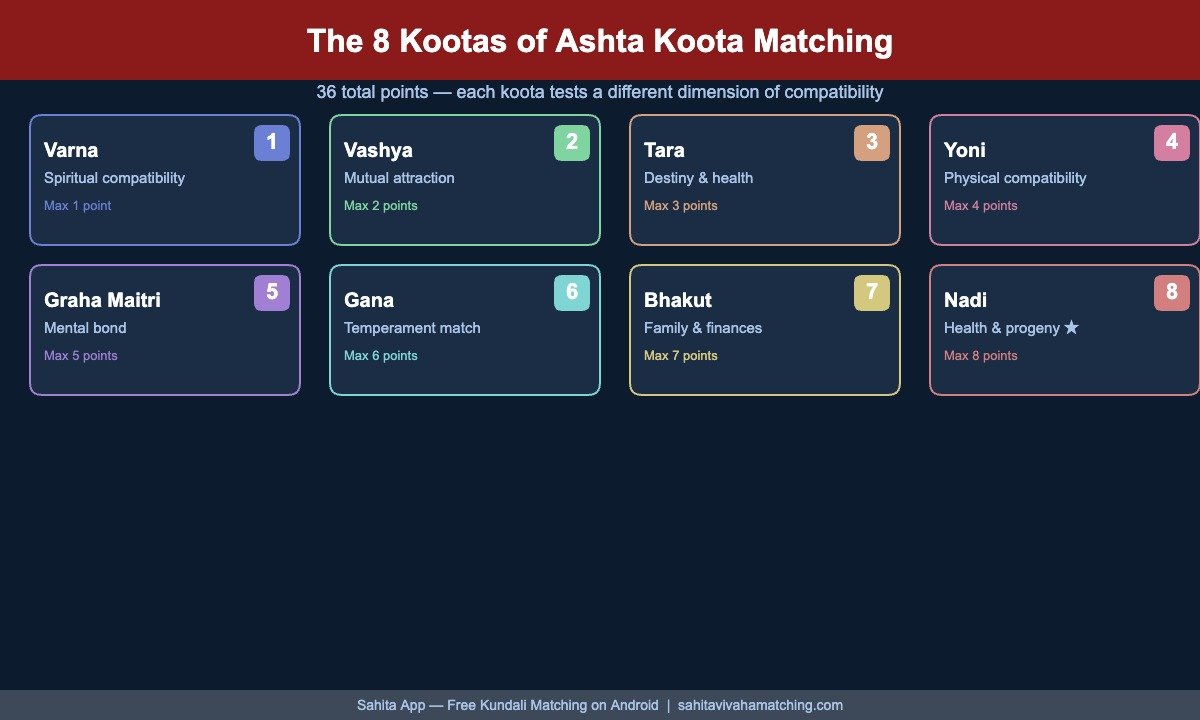
    ഗുണ മിലൻ (അഷ്ട കൂട്ട മിലൻ അല്ലെങ്കിൽ കുണ്ഡലി മിലൻ എന്നും അറിയപ്പെടുന്നു) a നക്ഷത്രത്തെ അടിസ്ഥാനമാക്കിയുള്ള അനുയോജ്യത സംവിധാനം. ഇത് വധൂവരന്മാരുടെ ജന്മനക്ഷത്രങ്ങളെ (ചന്ദ്രനക്ഷത്രങ്ങൾ) എട്ട് പരാമീറ്ററുകളിലായി താരതമ്യം ചെയ്യുന്നു - വർണ്ണ, വശ്യ, താര, യോനി, ഗ്രഹ മൈത്രി, ഗണ, ഭകുത്, നാഡി - കൂടാതെ 36-ൽ നിന്ന് മൊത്തം സ്കോർ ഉണ്ടാക്കുന്നു.

    സിസ്റ്റം പൂർണ്ണമായും അടിസ്ഥാനമാക്കിയുള്ളതാണ് ചന്ദ്രൻ്റെ സ്ഥാനം രണ്ട് ചാർട്ടുകളിലും. ചന്ദ്രരാശിയും (രാശി) നക്ഷത്രവും മാത്രമാണ് ആവശ്യമുള്ള ഇൻപുട്ടുകൾ.

    ഗുണ മിലാൻ്റെ പ്രധാന സവിശേഷതകൾ:

    • അനുയോജ്യതയുടെ 8 വ്യത്യസ്ത മേഖലകൾ വിലയിരുത്തുന്നു
    • 0 മുതൽ 36 വരെയുള്ള സ്കോർ നിർമ്മിക്കുന്നു (18+ ആണ് ഏറ്റവും കുറഞ്ഞത് ശുപാർശ ചെയ്യുന്നത്)
    • നക്ഷത്രത്തെയും രാശിയെയും (ചന്ദ്രൻ്റെ സ്ഥാനം) മാത്രം അടിസ്ഥാനമാക്കിയുള്ളതാണ്
    • മറ്റേതെങ്കിലും ഗ്രഹത്തിൻ്റെ സ്ഥാനം പരിഗണിക്കുന്നില്ല
    • ദീർഘകാല അനുയോജ്യത, വൈകാരിക ബന്ധം, ശാരീരിക ഐക്യം എന്നിവ വിലയിരുത്തുന്നു
    • ദോശകൾ അതിൻ്റെ സ്വന്തം സംവിധാനത്തിൽ ഫ്ലാഗ് ചെയ്യാൻ കഴിയും (നാഡി ദോഷ, ഭകുത് ദോഷ, ഗണദോശ)

    എന്താണ് മംഗളദോഷം?

    മംഗള ദോഷം (മംഗൾ ദോഷം, കുജ ദോഷം അല്ലെങ്കിൽ ചെവ്വായ് ദോഷം എന്നും അറിയപ്പെടുന്നു) തികച്ചും വ്യത്യസ്തമായ ഒരു വിലയിരുത്തലാണ്. അത് അല്ല അഷ്ടകൂട്ട സമ്പ്രദായത്തിൻ്റെ ഭാഗം. പകരം, അത് എ പ്ലാനറ്റ് പ്ലേസ്മെൻ്റ് വിശകലനം - ജനന ചാർട്ടിൽ ചൊവ്വ (മംഗൾ/കുജ) എവിടെയാണ് ഇരിക്കുന്നതെന്ന് പ്രത്യേകം നോക്കുന്നു.

    മംഗളദോഷം സംഭവിക്കുന്നത് ചൊവ്വ ഗ്രഹത്തിൽ നിൽക്കുമ്പോഴാണ് 1, 2, 4, 7, 8, അല്ലെങ്കിൽ 12 വീട് ജനന ജാതകത്തിൻ്റെ. (ചില പാരമ്പര്യങ്ങളിൽ 5 വീടുകൾ മാത്രം ഉൾപ്പെടുന്നു; മറ്റുള്ളവർ 7 ഉപയോഗിക്കുന്നു. ഏറ്റവും വ്യാപകമായി ഉപയോഗിക്കുന്ന പട്ടികയിൽ മുകളിലുള്ള ആറ് സ്ഥാനങ്ങളും ഉൾപ്പെടുന്നു.)

    മംഗള ദോഷത്തിൻ്റെ പ്രധാന സവിശേഷതകൾ:

    • സ്ഥാനത്തെ അടിസ്ഥാനമാക്കി ചൊവ്വ ജനന ചാർട്ടിൽ
    • ൽ വിലയിരുത്തി ലഗ്ന ചാർട്ട് (ചന്ദ്ര, നവാംശ ചാർട്ടുകൾ ചിലപ്പോൾ)
    • എ ആണ് ചാർട്ട്-ലെവൽ ഘടകം - നക്ഷത്രവുമായോ രാശിയുമായോ ബന്ധമില്ല
    • വൈവാഹിക സംഘർഷം, ആരോഗ്യ പ്രശ്നങ്ങൾ, ദാമ്പത്യ ജീവിതത്തിലെ ബുദ്ധിമുട്ടുകൾ എന്നിവയുമായി പരമ്പരാഗതമായി ബന്ധപ്പെട്ടിരിക്കുന്നു
    • ഓരോ പങ്കാളിയുടെയും ചാർട്ടിനെ സ്വതന്ത്രമായി ബാധിക്കുന്നു - ഒന്നോ രണ്ടോ പങ്കാളികൾക്ക് ഇത് ഉണ്ടായിരിക്കാം

    ഗുണ മിലൻ vs മംഗള ദോഷം: നക്ഷത്രം vs ഗ്രഹ സ്ഥാനം

    മനസ്സിലാക്കേണ്ട ഏറ്റവും പ്രധാനപ്പെട്ട വേർതിരിവ് ഇതാണ്:

    മിലാൻ ഉപയോഗിക്കുക മംഗള ദോഷം
    ഇതിനെ അടിസ്ഥാനമാക്കി നക്ഷത്രം (ചന്ദ്രൻ്റെ സ്ഥാനം) ചൊവ്വയുടെ വീട് സ്ഥാപിക്കൽ
    സിസ്റ്റം അഷ്ട കൂട്ട (8 പരാമീറ്ററുകൾ) ഏക ഗ്രഹ വിശകലനം
    സ്കോർ 0–36 പോയിൻ്റ് നിലവിലുണ്ട് / ഹാജരില്ല / റദ്ദാക്കി
    പരിശോധനകൾ രണ്ട് ചാർട്ടുകളും ഒരുമിച്ച് ഓരോ ചാർട്ടും സ്വതന്ത്രമായി
    അത് എന്താണ് അളക്കുന്നത് മൊത്തത്തിലുള്ള അനുയോജ്യത ചൊവ്വയുമായി ബന്ധപ്പെട്ട അപകട ഘടകങ്ങൾ
    അഷ്ടക്കൂട്ടത്തിൻ്റെ ഭാഗമോ? അതെ — അത് അഷ്ടക്കൂട്ടമാണ് ഇല്ല - അഷ്ടക്കൂട്ടത്തിൽ നിന്ന് വേറിട്ട്
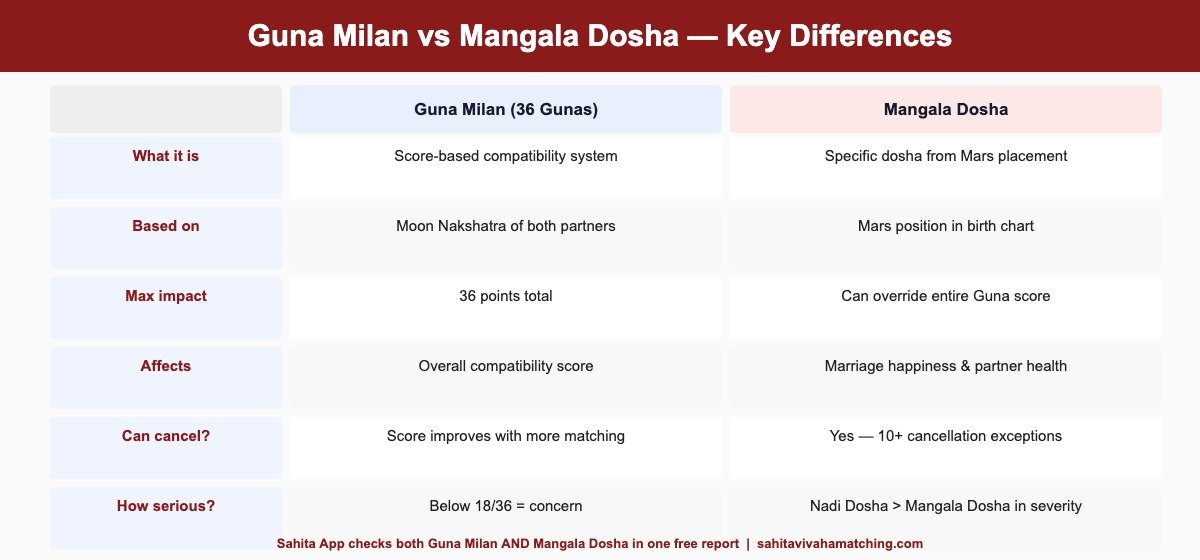
    Guna Milan vs Mangala Dosha — Key Differences Comparison Chart

    അവർ ചാർട്ടിൻ്റെ വിവിധ ഭാഗങ്ങളിൽ നിന്ന് വരയ്ക്കുകയും വ്യത്യസ്ത കാര്യങ്ങൾ അളക്കുകയും ചെയ്യുന്നതിനാൽ, നല്ല ഗുണ സ്കോർ മംഗളദോഷത്തെ നിർവീര്യമാക്കുന്നില്ല, കൂടാതെ മംഗളദോഷം ഗുണ സ്‌കോറിനെ നേരിട്ട് ബാധിക്കുന്നില്ല.

    ഏതാണ് മുൻഗണന നൽകുന്നത്?

    ഗുണ മിലനും മംഗള ദോഷവും മനസ്സിലാക്കുന്നത് കുടുംബങ്ങളെ മികച്ച തീരുമാനങ്ങളെടുക്കാൻ സഹായിക്കുന്നു. ഗുണ മിലനും മംഗള ദോശയും പരിശോധിക്കേണ്ടത് അത്യാവശ്യമാണ് - രണ്ടും മറ്റൊന്നിനേക്കാൾ സമ്പൂർണ്ണ മുൻഗണന എടുക്കുന്നില്ല. അവർ വ്യത്യസ്‌ത അപകടസാധ്യതകൾ വിലയിരുത്തുന്നു, രണ്ടും ഒരു സമ്പൂർണ്ണ ചിത്രത്തിനായി വിലയിരുത്തണം. പരിചയസമ്പന്നരായ ജ്യോതിഷികൾ ശുപാർശ ചെയ്യുന്ന പ്രായോഗിക സമീപനം ഇതാ:

    ഘട്ടം 1: ആദ്യം ഗുണ മിലൻ പ്രവർത്തിപ്പിക്കുക.

    ഇത് നിങ്ങൾക്ക് വിശാലമായ അനുയോജ്യത ചിത്രം നൽകുന്നു. 18-ന് താഴെയുള്ള സ്കോർ മംഗള ദോഷം പരിഗണിക്കാതെ തന്നെ ഒരു ചെങ്കൊടിയാണ്. 25+ സ്‌കോർ എന്നത് വിശാലമായി പൊരുത്തപ്പെടുന്ന സഖ്യത്തെ സൂചിപ്പിക്കുന്നു.

    ഘട്ടം 2: ഗുണ മിലാനിലെ ദോശകൾ ഉണ്ടോയെന്ന് പരിശോധിക്കുക.

    പ്രത്യേകമായി പരിശോധിക്കുക: നാഡി ദോഷ (8 പോയിൻ്റ്), ഭകുത് ദോഷ (7 പോയിൻ്റ്), ഗണദോഷ (6 പോയിൻ്റ്). ഇത് ഒരു നല്ല മൊത്തം സ്‌കോറിനെ കാര്യമായി ബാധിക്കും.

    ഘട്ടം 3: രണ്ട് ചാർട്ടുകളിലും സ്വതന്ത്രമായി മംഗള ദോഷം പരിശോധിക്കുക.

    വധുവിന് മംഗളദോഷമുണ്ടോ? വരൻ ചെയ്യുമോ? ഒരു പങ്കാളിക്ക് മാത്രമേ ഇത് ഉള്ളൂ, മറ്റൊരാൾക്ക് ഇല്ലെങ്കിൽ, പരമ്പരാഗത ജ്യോതിഷം അതിനെ പ്രശ്നമായി കണക്കാക്കുന്നു. രണ്ടിനും അത് ഉണ്ടെങ്കിൽ, മിക്ക പാരമ്പര്യങ്ങളും ഇത് പരിഗണിക്കുന്നു a റദ്ദാക്കൽ - ചൊവ്വയുടെ ഊർജ്ജം സന്തുലിതമാകുന്നു.

    ഘട്ടം 4: മംഗള ദോശ റദ്ദാക്കലുകൾ പരിശോധിക്കുക.

    മംഗള ദോഷം (ചുവടെ വിവരിച്ചിരിക്കുന്നത്) റദ്ദാക്കുന്ന നിരവധി അംഗീകൃത വ്യവസ്ഥകളുണ്ട്. ദോശ സജീവമായി കണക്കാക്കുന്നതിന് മുമ്പ് എല്ലായ്പ്പോഴും റദ്ദാക്കൽ പരിശോധിക്കുക.

    മംഗള ദോഷ റദ്ദാക്കലുകൾ

    ക്ലാസിക്കൽ വേദ ജ്യോതിഷത്തിൽ മംഗള ദോഷത്തിന് ധാരാളം റദ്ദാക്കൽ വ്യവസ്ഥകൾ ഉണ്ട്:

    1. രണ്ട് പങ്കാളികൾക്കും മംഗളദോഷമുണ്ട്: ഏറ്റവും വ്യാപകമായി അംഗീകരിക്കപ്പെട്ട റദ്ദാക്കൽ. വധൂവരന്മാർക്ക് ദോഷമുണ്ടാക്കുന്ന വീട്ടിൽ ചൊവ്വ ഉണ്ടെങ്കിൽ, ദോഷം സ്വയം റദ്ദാക്കുന്നതായി കണക്കാക്കപ്പെടുന്നു. യുക്തി: രണ്ടും ഒരേ ചൊവ്വയുടെ തീവ്രത കൊണ്ടുവരുന്നു, അതിനാൽ അസന്തുലിതാവസ്ഥയില്ല.

    2. ചൊവ്വ സ്വന്തം രാശിയിലാണ് അല്ലെങ്കിൽ ഉയർന്നതാണ്: ചൊവ്വ ഏരീസ് അല്ലെങ്കിൽ വൃശ്ചികം (സ്വന്തം അടയാളങ്ങൾ) അല്ലെങ്കിൽ മകരം (ഉയർച്ച) ആണെങ്കിൽ, പല പാരമ്പര്യങ്ങളും ദോഷം റദ്ദാക്കുകയോ അല്ലെങ്കിൽ വളരെ കുറയുകയോ ചെയ്യുന്നു, കാരണം ചൊവ്വ കഷ്ടതയേക്കാൾ ശക്തിയുടെ സ്ഥാനത്താണ്.

    3. ചൊവ്വ വ്യാഴത്തോടൊപ്പമോ വശമോ ആണ്: ചൊവ്വയിൽ വ്യാഴത്തിൻ്റെ ഗുണപരമായ സ്വാധീനം ശക്തമായ ലഘൂകരണ ഘടകമായി കണക്കാക്കപ്പെടുന്നു. വേദ ജ്യോതിഷത്തിലെ സ്വാഭാവിക സംരക്ഷകനാണ് വ്യാഴം, ചാർട്ടിലെ ചൊവ്വയുമായുള്ള ബന്ധം മംഗള ദോഷത്തെ ഗണ്യമായി മയപ്പെടുത്തുന്നു.

    4. പ്രത്യേക രാശികളിൽ രണ്ടാം വീട്ടിൽ ചൊവ്വ: ചൊവ്വ രണ്ടാം ഭാവത്തിലാണെങ്കിലും സൗഹൃദ രാശിയിലാണെങ്കിൽ (മിഥുനം, കർക്കടകം, കന്നി) ചില ജ്യോതിഷികൾ ഈ സ്ഥാനത്ത് ദോഷം കണക്കാക്കില്ല.

    5. ചില രാശികളിൽ ഒന്നാം വീട്ടിൽ ചൊവ്വ: മേട ലഗ്നത്തിൽ, ചൊവ്വ ഒന്നാം ഭാവത്തിൽ (സ്വന്തം രാശിയിൽ) സ്ഥിതി ചെയ്യുന്നത് മിക്ക ജ്യോതിഷികളും പൊതുവെ മംഗളദോഷമായി കണക്കാക്കില്ല.

    6. 28 വയസ്സിനു ശേഷം: ഒരു വ്യക്തിക്ക് 28 വയസ്സ് തികയുമ്പോൾ മംഗളദോഷത്തിൻ്റെ തീവ്രത ഗണ്യമായി കുറയുന്നു എന്നതാണ് പൊതുവായുള്ള (സാർവത്രികമായി അംഗീകരിക്കപ്പെട്ടിട്ടില്ലെങ്കിലും) വീക്ഷണം. ചില ജ്യോതിഷികൾ ഇത് പ്രത്യേക ചാർട്ട് വ്യവസ്ഥകളിൽ മാത്രം പ്രയോഗിക്കുന്നു.

    ഉയർന്ന ഗുണ മിലൻ സ്‌കോറിന് മംഗള ദോഷം ഓഫ്‌സെറ്റ് ചെയ്യാൻ കഴിയുമോ?

    ഇല്ല - ഇത് ഒരു പൊതു തെറ്റിദ്ധാരണയാണ്. ഗുണ മിലനും മംഗള ദോഷവും തികച്ചും വ്യത്യസ്തമായ കാര്യങ്ങളാണ് അളക്കുന്നത്. ഒരു ഗുണ സ്കോർ 30 നക്ഷത്രത്തെ അടിസ്ഥാനമാക്കിയുള്ള അനുയോജ്യതയെക്കുറിച്ച് നിങ്ങളോട് പറയുന്നു. ചൊവ്വയെക്കുറിച്ച് ഒന്നും പറയുന്നില്ല. വളരെ ഉയർന്ന ഗുണ സ്‌കോറിനൊപ്പം ശക്തമായ ചൊവ്വ പ്ലേസ്‌മെൻ്റ് പ്രശ്‌നങ്ങളുള്ള ഒരു ചാർട്ട് നിലനിൽക്കും.

    എന്നിരുന്നാലും, സന്ദർഭം വളരെ പ്രധാനമാണ്. രണ്ട് പങ്കാളികൾക്കും മംഗളദോഷമുണ്ടെങ്കിൽ (റദ്ദാക്കൽ ബാധകമാണ്), കൂടാതെ ഗുണ സ്‌കോർ 28+ ആണ്, കൂടാതെ നാഡിയോ ഭകുത്ദോഷമോ ഇല്ല - ഇത് പരമ്പരാഗത വേദ വീക്ഷണകോണിൽ നിന്നുള്ള ശക്തമായ സഖ്യമാണ്. നല്ല ഗുണ സ്‌കോറും പരിഹരിച്ച മംഗളദോഷ സാഹചര്യവും കുടുംബങ്ങൾക്ക് യഥാർത്ഥ ആത്മവിശ്വാസം നൽകുന്നു.

    ഒരു ചാർട്ടിൽ മംഗള ദോഷം ഉള്ളപ്പോൾ മറ്റൊന്ന് ഇല്ലെങ്കിലും, റദ്ദാക്കൽ വ്യവസ്ഥ ഇല്ല - ഇതിനകം ദുർബലമായ ഗുണ സ്‌കോറുമായി സംയോജിപ്പിച്ച് പ്രത്യേകിച്ചും ആശങ്ക ഉയരുന്നു. ആ കോമ്പിനേഷന് ശ്രദ്ധാപൂർവമായ പരിഗണന ആവശ്യമാണ്.

    നാഡിദോശ vs മംഗളദോശയെ കുറിച്ച്?

    നാഡി ദോഷ (ഗുണ മിലൻ സമ്പ്രദായത്തിൽ നിന്ന്) അല്ലെങ്കിൽ മംഗള ദോഷ (അതിന് പുറത്ത് നിന്ന്) ഏതാണ് കൂടുതൽ ഗുരുതരമായതെന്ന് പല കുടുംബങ്ങളും ചോദിക്കുന്നു. സാർവത്രിക ഉത്തരമില്ല, പക്ഷേ ഇവിടെ ഉപയോഗപ്രദമായ ഒരു ചട്ടക്കൂട് ഉണ്ട്:

    നാഡി ദോഷം ഗുണ സ്‌കോറിൽ ഉൾച്ചേർത്തിരിക്കുന്നു - ഇത് 36 പോയിൻ്റിൽ 8 എണ്ണം നേരിട്ട് ഇല്ലാതാക്കുന്നു. അതിനാൽ നാഡി ദോഷമുള്ള ഒരു ദമ്പതികൾക്കും അപവാദങ്ങളൊന്നുമില്ലാതെയും 28-ൽ കൂടുതൽ സ്കോർ ചെയ്യാൻ കഴിയില്ല, മറ്റെല്ലാ കൂറ്റുകളും തികഞ്ഞതാണെങ്കിലും. ഇത് ഗുണ സ്‌കോറിൽ നേരിട്ടുള്ളതും കണക്കാക്കാവുന്നതുമായ സ്വാധീനം ചെലുത്തുന്നു.

    മംഗള ദോഷം ഗുണ സ്‌കോറിനെ ബാധിക്കില്ല - എന്നാൽ പരമ്പരാഗത വേദ ജ്യോതിഷം ഒരു പ്രധാന പൊരുത്ത ഘടകമായി കണക്കാക്കുന്നത് ഗുരുതരമായ ചാർട്ട് തലത്തിലുള്ള ആശങ്കയാണ്, പ്രത്യേകിച്ച് ദാമ്പത്യ ജീവിതത്തിൻ്റെ ദീർഘായുസ്സിനും യോജിപ്പിനും.

    മിക്ക ജ്യോതിഷികളും പറയും: രണ്ട് ദോഷങ്ങളും പരിഹരിക്കുക, അല്ലെങ്കിൽ രണ്ടിനും റദ്ദാക്കൽ സ്ഥാപിക്കുക.

    ഗുണ മിലനും മംഗള ദോഷവും എങ്ങനെ സഹിത പരിശോധിക്കുന്നു

    സാഹിത ആപ്പ് രണ്ട് സിസ്റ്റങ്ങളെയും ഉൾക്കൊള്ളുന്ന ഒരു സമ്പൂർണ്ണ അനുയോജ്യത പരിശോധന നടത്തുന്നു:

    • ഗുണ മിലൻ (അഷ്ട കൂട്ട): എല്ലാ 8 കൂട്ട സ്‌കോറുകളും കണക്കാക്കുന്നു, മൊത്തം ഗുണ സ്‌കോറും സ്‌കോറിനുള്ളിൽ നാഡി ദോഷവും ഭകുത് ദോഷവും ഫ്ലാഗ് ചെയ്യുന്നു.
    • മംഗളദോഷ പരിശോധന: രണ്ട് ജന്മ ചാർട്ടുകളിലെയും ചൊവ്വയുടെ സ്ഥാനം വിശകലനം ചെയ്യുന്നു, ആറ് ഗൃഹ സ്ഥാനങ്ങളും പരിശോധിച്ച് മംഗള ദോഷം ഉണ്ടോ ഇല്ലയോ അല്ലെങ്കിൽ റദ്ദാക്കിയിട്ടുണ്ടോ എന്ന് തിരിച്ചറിയുന്നു.

    രണ്ട് വിലയിരുത്തലുകളും ഒരേ റിപ്പോർട്ടിൽ ദൃശ്യമാകുന്നു, ഇത് നിങ്ങൾക്ക് അനുയോജ്യതയുടെ പൂർണ്ണമായ കാഴ്ച നൽകുന്നു - ഒറ്റപ്പെട്ട ഗുണ സ്കോർ മാത്രമല്ല. റിപ്പോർട്ട് വാട്ട്‌സ്ആപ്പ് വഴി പങ്കിടാം അല്ലെങ്കിൽ പ്രീമിയം പിഡിഎഫ് ആയി ഡൗൺലോഡ് ചെയ്യാം.

    ഗുണ മിലൻ vs മംഗള ദോഷ — സംഗ്രഹം

    പൂർണ്ണ വൈദിക വിവാഹ പൊരുത്തത്തിന് ഗുണ മിലനും മംഗള ദോഷവും താരതമ്യം ചെയ്യേണ്ടത് അത്യാവശ്യമാണ്. ഗുണ മിലനും മംഗള ദോഷവും വൈദിക വിവാഹ പൊരുത്ത വിലയിരുത്തലിലെ രണ്ട് വ്യത്യസ്ത ഉപകരണങ്ങളാണ്. ഗുണ മിലൻ 8 പാരാമീറ്ററുകളിൽ (0–36 സ്കെയിൽ) നക്ഷത്രത്തെ അടിസ്ഥാനമാക്കിയുള്ള അനുയോജ്യത സ്കോർ ചെയ്യുന്നു. മംഗള ദോഷം ഓരോ പങ്കാളിക്കും സ്വതന്ത്രമായി ജനന ചാർട്ടിൽ ചൊവ്വയുടെ സ്ഥാനം പരിശോധിക്കുന്നു. ഒരു സമ്പൂർണ്ണ അനുയോജ്യത വിലയിരുത്തലിൽ ഇവ രണ്ടും ഉൾപ്പെടുത്തിയിരിക്കണം - മറ്റൊന്ന് മാറ്റിസ്ഥാപിക്കുന്നില്ല. രണ്ടും അനുകൂല ഫലങ്ങൾ കാണിക്കുമ്പോൾ (നല്ല ഗുണ സ്കോർ + സജീവമായ മംഗള ദോഷം ഇല്ല, അല്ലെങ്കിൽ സ്ഥിരീകരിച്ച റദ്ദാക്കൽ), കുടുംബങ്ങൾക്ക് ആത്മവിശ്വാസത്തോടെ സഖ്യത്തെ സമീപിക്കാം.

    ഗുണ മിലനും മംഗള ദോഷവും ഒരിടത്ത് പരിശോധിക്കാൻ ആൻഡ്രോയിഡിൽ സാഹിത ആപ്പ് സൗജന്യമായി ഡൗൺലോഡ് ചെയ്യുക.

    ഇതും വായിക്കുക: എന്താണ് അഷ്ടക്കൂട്ട പൊരുത്തം? | എന്താണ് നാഡി ദോഷം? | 36 ഗുണ മിലൻ സ്കോർ ഗൈഡ്
  • What is Nadi Dosha? Causes, Effects & Remedies Explained

    What is Nadi Dosha? Causes, Effects & Remedies Explained

    Of all the compatibility factors checked during kundali matching, നാഡി ദോഷം is often the one that causes the most concern. It carries the highest weightage in the Ashta Koota system — 8 out of 36 points — and is traditionally associated with health problems, difficulties with children, and marital discord according to classical വേദ ജ്യോതിഷം texts. Many families call off alliances the moment Nadi Dosha is detected.

    But when does Nadi Dosha actually apply, and are there exceptions that nullify it? This guide covers the three Nadi types, conditions that trigger Nadi Dosha, classical exceptions, and proven remedies.

    What is Nadi?

    In Vedic astrology, the 27 Nakshatras (birth stars) are divided into three groups called Nadis, each corresponding to one of the three doshas in Ayurveda:

    നാഡി Dosha Meaning Nakshatras
    Aadi Nadi Vata Wind / Air Ashwini, Ardra, Punarvasu, Uttara Phalguni, Hasta, Jyeshtha, Moola, Shatabhisha, Poorva Bhadrapada
    Madhya Nadi Pitta Fire / Bile Bharani, Mrigashira, Pushya, Poorva Phalguni, Chitra, Anuradha, Poorva Ashadha, Dhanishtha, Uttara Bhadrapada
    Antya Nadi Kapha Water / Phlegm Krittika, Rohini, Ashlesha, Magha, Swati, Vishakha, Uttara Ashadha, Shravana, Revati
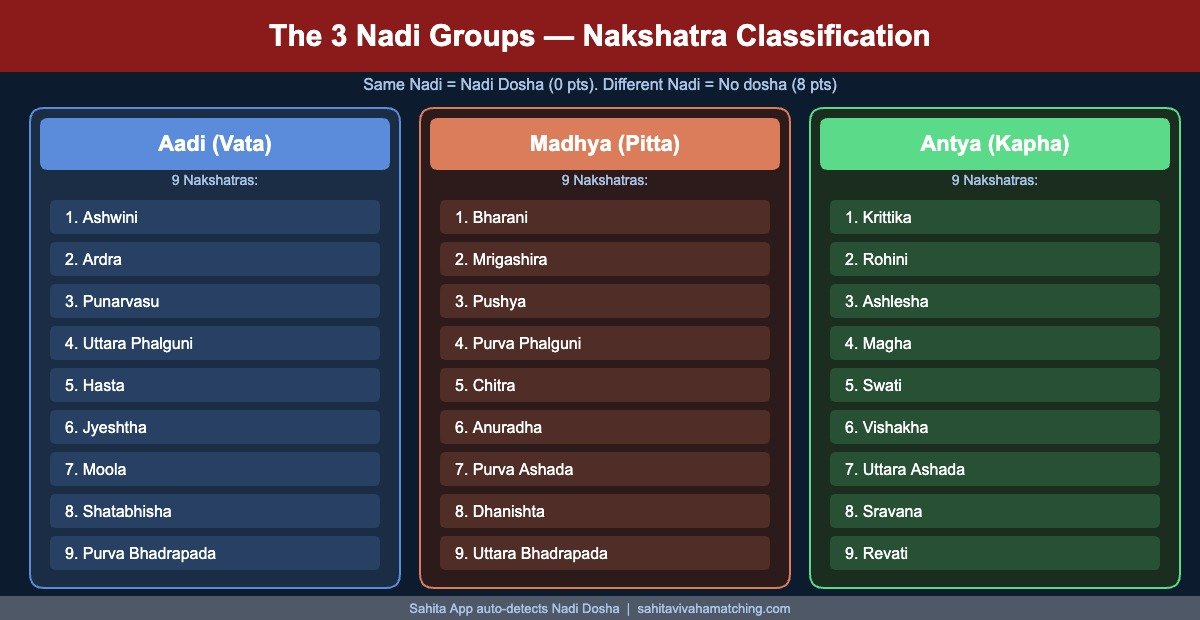
    3 Nadi Groups — Aadi, Madhya, Antya and their Nakshatras

    Every person’s birth Nakshatra falls into one of these three Nadis. If both the bride and groom have the same Nadi, it is called നാഡി ദോഷം (or Nadi Kuta Dosha).

    What Causes Nadi Dosha?

    This dosha occurs when both partners share the same Nadi — both Aadi, both Madhya, or both Antya. The logic in Vedic astrology is that two people with the same Nadi have identical elemental constitutions. Rather than complementing each other, they amplify the same qualities — leading to imbalance in the relationship.

    To check whether it applies:

    1. Find the bride’s birth Nakshatra and identify her Nadi
    2. Find the groom’s birth Nakshatra and identify his Nadi
    3. If both Nadis are the same — Nadi Dosha is present
    4. If the Nadis are different — full 8 points are scored in Ashta Koota

    The Sahita app detects this dosha automatically when you enter the birth details of both partners.

    Effects of Nadi Dosha

    Classical Vedic texts describe the effects in three categories depending on which Nadi both partners share:

    Aadi Nadi Dosha (both in Vata Nadi):

    Associated with health problems related to the nervous system and circulation. Classical texts link this with difficulties conceiving and potential conflict in the early years of marriage.

    Madhya Nadi Dosha (both in Pitta Nadi):

    Associated with emotional intensity, ego clashes, and friction in the relationship. Both partners may be strong-willed, leading to recurring disagreements.

    Antya Nadi Dosha (both in Kapha Nadi):

    Associated with lethargy, financial challenges, and slow-moving problems that build up over time. Some texts link this with difficulties related to children’s health.

    Important caveat: These are classical descriptions from traditional texts. Many astrologers take a nuanced view — noting that Nadi Dosha effects are not deterministic and depend heavily on the complete horoscope, planetary periods (dashas), and the individual’s overall chart strength. Modern Jyotishis often use Nadi Dosha as one signal among many, rather than a decisive yes/no.

    Nadi Dosha Exceptions — When Is It Cancelled?

    This is the most important section for families concerned about Nadi Dosha. Classical Vedic astrology recognises several Nadi Dosha Parihar (exceptions and cancellations). When any of these conditions apply, the Dosha is considered cancelled or significantly reduced in severity.

    Exception 1: Different Rashi, Same Nadi

    If both partners have the same Nadi but belong to different Moon signs (Rashis), many traditions consider this a partial or full cancellation. The reasoning: the similarity in Nadi is offset by the differences in Rashi, which indicates sufficiently different life paths and constitutions.

    Exception 2: Same Rashi, Different Nakshatra

    If both partners share the same Rashi (Moon sign) but have different Nakshatras within that Rashi, the dosha is typically cancelled. Different Nakshatras within the same Rashi still represent meaningfully different natures.

    Exception 3: Same Nakshatra, Different Pada

    Every Nakshatra is divided into four quarters (Padas). If both partners share the same Nakshatra but are in different Padas, many astrologers treat this as a cancellation of Nadi Dosha — the energy within the Nakshatra is expressed differently enough to nullify the concern.

    Exception 4: Lord of Nadi Nakshatra Is the Same Planet

    In some traditional assessments, if the ruling planet (Nakshatra lord) of both partners’ Nakshatras is the same, this forms a counterbalancing influence. This is a less universally accepted exception and varies by school of thought.

    Exception 5: Benefic Influence of Jupiter or Venus

    Some Jyotishis consider it significantly reduced when Jupiter (Guru) or Venus (Shukra) is strongly placed in both charts and aspects the relevant houses. This is a chart-level assessment that goes beyond the Ashta Koota system.

    What If Nadi Dosha Cannot Be Cancelled?

    When Nadi Dosha is clearly present and no exception applies, traditional Vedic astrology prescribes remedies to reduce its effects. These remedies are not guarantees, but they are widely practiced by families and recommended by Jyotishis:

    Remedy 1: Nadi Dosha Nivaran Puja

    A specific yajna (fire ritual) performed by a qualified Brahmin priest, dedicated to Lord Shiva and the Navagrahas. This is the most commonly recommended remedy. The puja typically includes chanting of specific mantras and offering of designated materials.

    Remedy 2: Mahamrityunjaya Mantra

    Regular recitation of the Mahamrityunjaya Mantra (OM Tryambakam Yajamahe…) is recommended — particularly by the groom — as a protective mantra against health-related effects of Nadi Dosha. 108 repetitions daily for a set period before the wedding is a common practice.

    Remedy 3: Donation and Charity

    Donating gold, silver, or cloth to a temple or to a qualified Brahmin is a traditional Vedic remedy for Dosha mitigation. The specific items vary based on the type of Nadi Dosha (Aadi, Madhya, or Antya) and the family’s tradition.

    Remedy 4: Wearing Gemstones

    Based on the overall chart, a Jyotishi may recommend specific gemstones to strengthen protective planets. This is a personalised remedy that requires a full chart reading rather than a general prescription.

    Nadi Dosha vs Bhakut Dosha — What’s More Serious?

    Both Nadi Dosha and Bhakut Dosha are considered Maha Doshas in the Ashta Koota system because of their high weightage (8 and 7 points respectively). Here is a quick comparison:

    Factor നാഡി ദോഷം Bhakut Dosha
    Points lost 8 7
    ഇതിനെ അടിസ്ഥാനമാക്കി Nakshatra (birth star) Rashi (Moon sign)
    Primary concern Health and progeny Emotional bond and finances
    Exceptions available Yes (multiple) Yes
    Severity if uncancelled High High

    Both Doshas should be checked and evaluated for cancellation before a final compatibility verdict is reached.

    How Sahita App Detects Nadi Dosha

    When you enter the birth details of both partners in the Sahita app, the following happens automatically:

    1. The app calculates the birth Nakshatra for both individuals from their date, time, and place of birth.
    2. It identifies the നാഡി (Aadi, Madhya, or Antya) for each Nakshatra.
    3. It checks whether both Nadis are the same.
    4. If Nadi Dosha is present, the app flags it clearly in the results.
    5. It also checks applicable exceptions — such as different Rashi or same Nakshatra with different Pada — and indicates if the Dosha is cancelled.

    This means you get not just a “Dosha present” flag but also context on whether exceptions apply — all within the free report. For a complete Dosha assessment including remedies, the premium report provides a detailed PDF you can share with a family pandit.

    Summary

    Nadi Dosha is triggered when both partners share the same Nadi — Aadi, Madhya, or Antya — based on their birth Nakshatra. It carries the highest weight in the Ashta Koota system (8 points) and is associated with health and progeny concerns in classical Vedic texts. However, several classical exceptions can cancel or reduce Nadi Dosha — including different Rashi, different Nakshatra, or different Pada. When no exception applies, traditional Vedic remedies including Nadi Dosha Nivaran Puja and Mahamrityunjaya Mantra recitation are recommended.

    The Sahita app detects Nadi Dosha automatically and checks for applicable exceptions. Download free on Android.

    ഇതും വായിക്കുക: എന്താണ് അഷ്ടക്കൂട്ട പൊരുത്തം? | ഗുണ മിലൻ vs മംഗള ദോഷ | 36 ഗുണ മിലൻ സ്കോർ ഗൈഡ്

  • 36 Guna Milan — How Many Gunas Are Needed for Marriage?

    36 ഗുണ മിലൻ - വിവാഹത്തിന് എത്ര ഗുണങ്ങൾ ആവശ്യമാണ്?

    വിവാഹബന്ധത്തിൽ കുടുംബങ്ങൾ ചോദിക്കുന്ന ഏറ്റവും സാധാരണമായ ചോദ്യങ്ങളിലൊന്ന് ഇതാണ്: എത്ര ഗുണങ്ങൾ പൊരുത്തപ്പെട്ടു? ഈ ഒറ്റ സംഖ്യ - ഇതിൽ നിന്ന് വരച്ചതാണ് 36 ഗുണ മിലൻ സിസ്റ്റം - പരമ്പരാഗതമായി വലിയ ഭാരം വഹിക്കുന്നു വേദ ജ്യോതിഷം വിവാഹ പൊരുത്തം. 36 ഗുണ മിലാൻ സംവിധാനം എട്ട് പരാമീറ്ററുകളിലുടനീളമുള്ള അനുയോജ്യത വിലയിരുത്തുകയും 36-ൽ നിന്ന് മൊത്തം സ്കോർ നിർമ്മിക്കുകയും ചെയ്യുന്നു. എന്നാൽ ഒരു വിവാഹത്തിന് നൽകിയിട്ടുള്ള സ്കോർ യഥാർത്ഥത്തിൽ എന്താണ് അർത്ഥമാക്കുന്നത്?

    36 ഗുണ മിലൻ എങ്ങനെ പ്രവർത്തിക്കുന്നു, ഓരോ സ്‌കോർ റേഞ്ചും എന്താണ് അർത്ഥമാക്കുന്നത്, നിങ്ങളുടെ 36 ഗുണ മിലാൻ സ്‌കോർ എങ്ങനെ സഹിത ആപ്പ് ഉപയോഗിച്ച് സൗജന്യമായി കണക്കാക്കാം എന്നിവ ഈ ലേഖനം വിശദീകരിക്കുന്നു.

    ആമുഖം

    വിവാഹസമയത്ത് കുടുംബങ്ങൾ ചോദിക്കുന്ന ഏറ്റവും സാധാരണമായ ചോദ്യങ്ങളിൽ ഒന്ന്: "എത്ര ഗുണങ്ങൾ പൊരുത്തപ്പെട്ടു?" ഈ ഒറ്റ സംഖ്യ - 36 ഗുണ മിലൻ സമ്പ്രദായത്തിൽ നിന്ന് വരച്ചത് - പരമ്പരാഗത വൈദിക വിവാഹ പൊരുത്തത്തിൽ വലിയ ഭാരം വഹിക്കുന്നു. എന്നാൽ 36 ഗുണ മിലാൻ എന്താണ്, അത് എങ്ങനെയാണ് കണക്കാക്കുന്നത്, ഒരു വിവാഹത്തിന് നൽകിയിട്ടുള്ള ഏതെങ്കിലും സ്കോർ യഥാർത്ഥത്തിൽ എന്താണ് അർത്ഥമാക്കുന്നത്?

    ഈ ലേഖനം ആ ചോദ്യങ്ങൾക്കെല്ലാം വ്യക്തമായും പൂർണ്ണമായും ഉത്തരം നൽകുന്നു, ഓരോ സ്‌കോർ ശ്രേണിയും എന്താണ് അർത്ഥമാക്കുന്നത്, സാഹിത ആപ്പ് നിങ്ങളുടെ ഗുണ മിലൻ സ്‌കോർ എങ്ങനെ സൗജന്യമായി കണക്കാക്കുന്നു എന്നതിൻ്റെ പൂർണ്ണമായ തകർച്ച ഉൾപ്പെടെ.

    എന്താണ് 36 ഗുണ മിലാൻ?

    36 ഗുണ മിലൻ (ഗുണ മിലൻ, ഗൺ മിലൻ അല്ലെങ്കിൽ കുണ്ഡലി മിലൻ എന്നും എഴുതിയിരിക്കുന്നു) വിവാഹ പൊരുത്തത്തെ വിലയിരുത്തുന്നതിനുള്ള ഒരു വേദ ജ്യോതിഷ രീതിയാണ്. വാക്ക് ഗുണ ഗുണം അല്ലെങ്കിൽ ഗുണം, ഒപ്പം മിലാൻ പൊരുത്തപ്പെടൽ അല്ലെങ്കിൽ യൂണിയൻ എന്നാണ് അർത്ഥമാക്കുന്നത്. 36 എന്ന സംഖ്യ സാധ്യമായ പരമാവധി സ്കോർ പ്രതിനിധീകരിക്കുന്നു - എട്ട് അനുയോജ്യത പരാമീറ്ററുകളിലുടനീളമുള്ള എല്ലാ പോയിൻ്റുകളുടെയും ആകെത്തുക അഷ്ടക്കൂട്ടം സിസ്റ്റം.

    എട്ട് കൂട്ടങ്ങളിൽ ഓരോന്നും ഒരു നിശ്ചിത എണ്ണം പോയിൻ്റുകൾ സംഭാവന ചെയ്യുന്നു. ഒരു ദമ്പതികളുടെ നക്ഷത്രങ്ങൾ (ജന്മനക്ഷത്രങ്ങൾ) എട്ട് കൂറ്റുകളിലുമായി താരതമ്യം ചെയ്യുമ്പോൾ, ഫലം 0 നും 36 നും ഇടയിലുള്ള ആകെ സ്കോർ ആണ്. ഈ സ്കോർ അനുയോജ്യതയുടെ നില നിർണ്ണയിക്കാൻ ഒരു സാധാരണ സ്കെയിലിൽ വ്യാഖ്യാനിക്കപ്പെടുന്നു.

    8 കൂട്ടങ്ങളും അവയുടെ ഭാരവും

    ഗുണ മിലാനിലെ 36 പോയിൻ്റുകൾ അനുയോജ്യതയുടെ എട്ട് വ്യത്യസ്ത മേഖലകളിൽ നിന്നാണ്. ഓരോ കൂറ്റയും സ്‌കോറിലേക്കുള്ള അതിൻ്റെ പരമാവധി സംഭാവനയും ഇതാ:

    കൂട്ടിച്ചേർക്കുക പരമാവധി പോയിൻ്റുകൾ പ്രധാന മേഖല
    നാഡി 8 ആരോഗ്യവും സന്തതിയും അനുയോജ്യത
    ഭകുത് 7 വൈകാരിക ബന്ധവും കുടുംബ ക്ഷേമവും
    ഗണ 6 സ്വഭാവവും സ്വഭാവവും
    ഗ്രഹ മൈത്രി 5 മാനസിക അനുയോജ്യത
    യോനി 4 ശാരീരികവും ലൈംഗികവുമായ അനുയോജ്യത
    താര (ദിന) 3 ദീർഘകാല ആരോഗ്യവും ഭാഗ്യവും
    വശ്യ 2 പരസ്പര ആകർഷണവും നിയന്ത്രണവും
    വർണ്ണ 1 ആത്മീയവും ഈഗോയും അനുയോജ്യത
    ആകെ 36
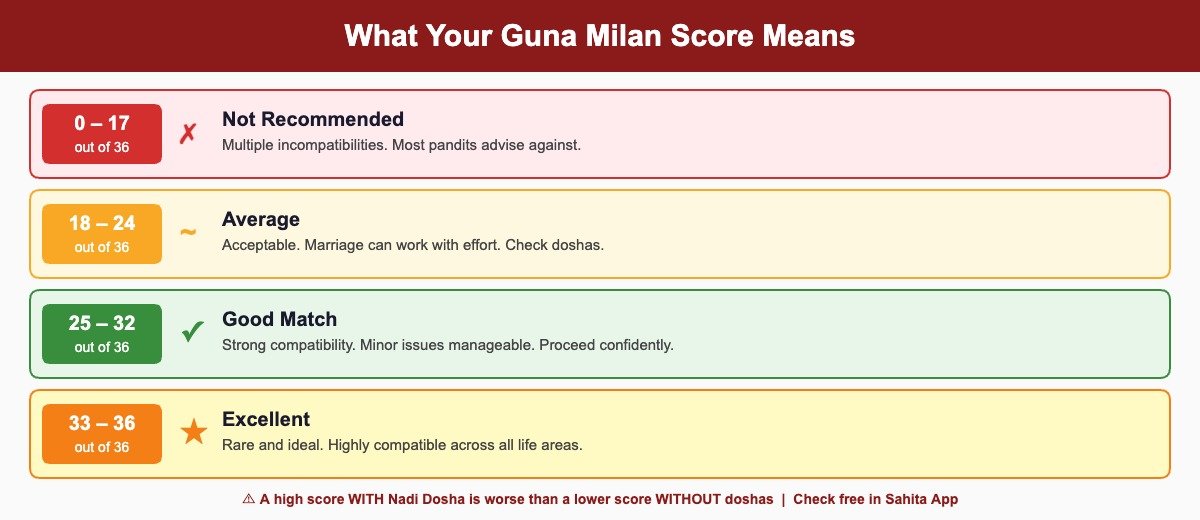
    36 Guna Milan Score Bands — What Your Score Means

    അത് ശ്രദ്ധിക്കുക നാഡി ഏറ്റവും ഉയർന്ന ഭാരം (8 പോയിൻ്റ്) വഹിക്കുന്നു ഭകുത് (7 പോയിൻ്റ്) ഒപ്പം ഗണ (6 points). These three kootas alone account for 21 of the possible 36 points, which is why a Dosha in any of these carries disproportionate significance in the overall assessment.

    What Does Each Score Range Mean?

    The 36-point scale is divided into four interpretation bands. Here is what each band means and how to apply it:

    സ്കോർ Compatibility Level What It Means
    0 – 17 Poor Marriage generally not recommended. Significant incompatibilities across multiple kootas. Consult an experienced Jyotishi before proceeding.
    18 – 24 Acceptable Minimum recommended threshold. Proceed with caution. Check whether any Doshas (Nadi, Bhakut, Gana) are present and whether exceptions apply.
    25 – 32 Good Strong compatibility. This is a well-matched alliance. Minor Doshas, if present, may be acceptable depending on context.
    33 – 36 Excellent Ideal match. Very rare; considered extremely auspicious. All or nearly all kootas show full compatibility.

    Most matched couples fall in the 18–32 range. A score of exactly 18 is the widely accepted minimum threshold in Vedic astrology, though different regional traditions and individual astrologers may have slight variations in how they apply this.

    Gun Milan vs Ashta Koota — What’s the Difference?

    People often use these terms interchangeably, and technically they refer to the same system. However, here is a useful way to distinguish them:

    So when someone says “our Gun Milan score is 28,” they are saying that 28 out of 36 Gunas matched across the Ashta Koota system. The two terms describe different aspects of the same process.

    Why the Total Score Is Not Enough

    A common mistake is to look only at the total Guna score and ignore individual koota results. This can be misleading for two reasons:

    A couple may score 26 out of 36, which looks good on the surface. But if those 26 points come with a നാഡി ദോഷം (both partners in the same Nadi) scoring 0 on the highest-weighted koota — and that Dosha is not cancelled — many astrologers would flag the match regardless of the total score.

    A low Yoni score (1 out of 4) indicates physical incompatibility. A low Graha Maitri (1 out of 5) suggests mental friction. These individual signals may matter more than the aggregate total in practice, especially when a family astrologer is reviewing the chart.

    This is why a detailed Ashta Koota report — showing each koota score individually — is far more useful than just the total number.

    Guna Milan by Name vs by Date of Birth

    There are two ways to derive the Nakshatra for Guna Milan:

    The Sahita app supports both methods. For the most accurate 36 Guna Milan score, always use date-of-birth matching when the birth time is available.

    How Sahita Calculates Your Guna Milan Score

    When you open the Sahita app and enter the birth details of both partners, the app performs the following steps:

    1. Calculates the exact Nakshatra (birth star) from the date, time, and place of birth using the Moon’s position — for both individuals.
    2. Derives the Rashi (Moon sign) from the Nakshatra.
    3. Runs each of the 8 koota calculations using the classical compatibility tables from Vedic astrology.
    4. Adds up all koota scores to produce the total Guna Milan score out of 36.
    5. Checks for നാഡി ദോഷം ഒപ്പം മംഗള ദോഷം automatically.
    6. Generates a detailed report showing each koota score, the Dosha status, and an overall compatibility assessment.

    The entire analysis takes seconds. The result can be shared via WhatsApp or saved as a PDF premium report.

    Frequently Asked Questions About Guna Milan

    18 out of 36 is the traditional minimum threshold. It is considered acceptable but not ideal. If the score is exactly 18 or just above, it is wise to also check whether any Doshas are present — particularly Nadi Dosha or Bhakut Dosha — before making a final decision.

    Yes, 24 Gunas falls in the “acceptable” range and is considered a reasonable match by most traditions. The individual koota breakdown and Dosha status should be reviewed alongside the total score.

    This is a nuanced situation. A score of 28 is good, but an uncancelled Nadi Dosha scoring 0 on the highest-weighted koota is a serious flag. A qualified Jyotishi would typically review whether any of the classical Nadi Dosha exceptions (Parihar) apply before advising the family.

    Yes, if the exact birth time is not available, the Nakshatra can be estimated from the name’s first syllable. The Sahita app supports this method but also notes that DOB-based matching is more accurate.

    Summary

    36 Guna Milan is the cornerstone of Vedic marriage compatibility assessment. The scoring system breaks down into 8 kootas totalling 36 points, with scores of 18–24 considered acceptable, 25–32 good, and 33–36 excellent. However, the total score must always be read alongside the individual koota scores and the presence of Doshas — especially Nadi Dosha, which carries the maximum weightage of 8 points.

    Use the Sahita app to calculate your full 36 Guna Milan score for free on Android, with a complete koota-by-koota breakdown, Dosha detection, and a shareable report.

    ഇതും വായിക്കുക: എന്താണ് അഷ്ടക്കൂട്ട പൊരുത്തം? | എന്താണ് നാഡി ദോഷം? | Kundali Matching by Name — How It Works

  • What is Ashta Koota Matching? Complete Guide to 8 Kootas in Vedic Astrology

    What is Ashta Koota Matching? Complete Guide to 8 Kootas in Vedic Astrology

    When two families sit down to evaluate a marriage alliance, the first step in traditional Hindu practice is comparing birth charts. At the heart of this process is Ashta Koota matching — an ancient വേദ ജ്യോതിഷം system that assesses marriage compatibility across eight specific parameters. The word Ashta means eight, and Koota means compatibility point — forming a structured scoring system with a maximum of 36 Gunas.

    This guide explains all eight kootas, how the Ashta Koota matching score works, what it means for your marriage alliance, and how the Sahita app calculates it accurately from both partners’ birth details.

    ആമുഖം

    When two families come together to discuss a marriage alliance, the first thing a traditional Hindu family typically does is compare the horoscopes. At the heart of this process is Ashta Koota matching — an ancient Vedic system that evaluates marriage compatibility across eight different parameters.

    The word “Ashta” means eight, and “Koota” means group or point. Together, Ashta Koota matching is a structured scoring system that assigns points to eight areas of compatibility between two birth charts. The maximum possible score is 36 Gunas, and the system is designed to assess whether two individuals are well-matched for a long, harmonious marriage.

    This guide explains all eight kootas, how the scoring works, what your Guna score means, and how tools like the Sahita app calculate it accurately using just the birth details of both partners.

    What is the Ashta Koota System?

    Ashta Koota matching is based on the Nakshatra (birth star) of both the bride and groom. The Nakshatra is determined from the Moon’s position at the time of birth. This is why kundali matching for marriage is sometimes called Nakshatra porutham in South India or Nakshatramilan in other traditions.

    Each of the eight kootas tests a specific dimension of compatibility — from basic temperament to sexual harmony, financial stability, and health of children. The system comes from classical texts including the Brihat Parashara Hora Shastra ഒപ്പം Muhurta Chintamani and has been used by Vedic astrologers for centuries.

    The 8 Kootas — Complete Breakdown

    The table below shows each koota, its maximum points, and what it measures.

    # Koota Name പരമാവധി പോയിൻ്റുകൾ What It Measures
    1 വർണ്ണ 1 Spiritual compatibility and ego levels
    2 വശ്യ 2 Mutual control, attraction, and dominance
    3 Tara 3 Destiny compatibility and long-term health/fortune
    4 യോനി 4 Physical and sexual compatibility
    5 ഗ്രഹ മൈത്രി 5 Mental compatibility and friendship between Moon signs
    6 ഗണ 6 Temperament and nature (Deva, Manushya, or Rakshasa)
    7 ഭകുത് 7 Emotional compatibility and family well-being
    8 നാഡി 8 Health compatibility and progeny (childbearing)
    ആകെ 36
    8 Kootas of Ashta Koota Matching — Complete Overview

    Detailed Explanation of Each Koota

    1. Varna (1 point)

    Varna represents the spiritual or psychological nature of a person based on their Nakshatra. There are four Varna types — Brahmin, Kshatriya, Vaishya, and Shudra — which in this context represent levels of spiritual development rather than caste categories. In Ashta Koota matching, the groom’s Varna should ideally be equal to or higher than the bride’s for full points. Same Varna scores 1 point; a mismatch scores 0.

    2. Vashya (2 points)

    Vashya tests the natural affinity and mutual influence between two partners. The 12 Rashis (zodiac signs) are grouped into five categories: Manav (human), Chatushpad (quadruped), Jalachara (aquatic), Vanchar (wild), and Keeta (insects). Full points (2) are scored when the signs have strong mutual control; partial points (1) when there is one-sided influence; 0 when there is no connection.

    3. Tara (3 points)

    Tara (or Dina) koota examines the relationship between the Nakshatras of the bride and groom in terms of long-term fortune and health. The Nakshatra of the groom is counted from the bride’s Nakshatra, and the result (divided by 9) determines the Tara score. Odd remainders are considered auspicious; even ones inauspicious. This koota is particularly linked to the longevity and health of both partners after marriage.

    4. Yoni (4 points)

    Yoni koota assesses physical and sexual compatibility. Each Nakshatra is assigned a symbolic animal — such as horse, elephant, sheep, or serpent — and compatibility is determined by how these animals relate to each other in nature. Friendly animals score 4 points; neutral pairings score 2–3; hostile pairings score 0–1. A poor Yoni score can indicate fundamental physical incompatibility between partners.

    5. Graha Maitri (5 points)

    This koota measures the compatibility of the ruling planets (lords) of the Moon signs (Rashis) of both partners. If the two planetary lords are natural friends, the couple is likely to have a harmonious mental connection and mutual understanding. Friendly lord pairs score 5 points; neutral pairs score 3–4; enemy pairs score 0–1. Graha Maitri is considered one of the most important kootas for a successful long-term marriage.

    6. Gana (6 points)

    Gana koota classifies each Nakshatra into one of three categories — Deva (divine/spiritual), Manushya (human), and Rakshasa (fierce/intense). Ideally, both partners should belong to the same Gana. Two Devas or two Manushyas together score 6 points. A Deva and Manushya match may score partial points. Deva and Rakshasa is generally considered an incompatible match and scores 0. This koota reflects fundamental differences in outlook, temperament, and lifestyle.

    7. Bhakut (7 points)

    Bhakut (also written Bhakoot) is one of the highest-weighted kootas, carrying 7 points. It tests the emotional and relational compatibility between the Moon signs of the couple. The calculation involves the relative position of the two Rashis. Certain combinations — like 6-8 (Shad-Ashtaka), 5-9, or 2-12 positions — are considered inauspicious and may indicate emotional distance, financial troubles, or conflict. A compatible Bhakut scores the full 7 points; an inauspicious one scores 0.

    8. Nadi (8 points)

    Nadi carries the maximum weight in the entire system — 8 points — making it the most important koota. Each Nakshatra belongs to one of three Nadis: Aadi (Vata), Madhya (Pitta), or Antya (Kapha). If both partners belong to the same Nadi, it is called നാഡി ദോഷം and scores 0 points. Different Nadis score the full 8 points. Nadi Dosha is traditionally considered a serious incompatibility, linked to health of offspring and marital harmony, though certain exceptions (Nadi Dosha Parihar) can nullify it.

    What Does Your Total Guna Score Mean?

    After adding up the points from all 8 kootas, you get a total score between 0 and 36. Here is how to interpret it:

    Score Range Interpretation Recommendation
    0 – 17 Poor compatibility Marriage generally not recommended without deeper analysis
    18 – 24 Acceptable compatibility Proceed with caution; check for Doshas
    25 – 32 Good compatibility Recommended; strong foundation for marriage
    33 – 36 Excellent compatibility Ideal match; very auspicious

    It is important to understand that the total score is not the only factor. Even a score above 18 may be reconsidered if there is an uncancelled Nadi Dosha, Bhakut Dosha, or Mangala Dosha present. Conversely, a score slightly below 18 may still be acceptable if all eight individual kootas are analysed carefully and no major Dosha is detected.

    Important Doshas to Check Alongside Guna Score

    Even when the Guna score is satisfactory, traditional Vedic astrologers check for these specific issues:

    How Does Sahita App Calculate Ashta Koota Matching?

    The Sahita app performs the full Ashta Koota analysis automatically using the birth details of both partners. Here is what you need to enter:

    • Full name (used for display; Nakshatra is derived from date and time of birth)
    • Date of birth
    • Time of birth (as accurate as possible)
    • Place of birth

    From this information, Sahita calculates the Nakshatra, Rashi (Moon sign), ഒപ്പം Lagna (Ascendant) for both individuals. It then runs all 8 koota calculations using the classical tables from Vedic astrology and produces a final Guna score with a detailed breakdown of each koota — showing how many points were scored and why.

    Sahita also automatically flags Nadi Dosha and Mangala Dosha if present, and explains whether any exceptions or cancellations apply. The report can be shared via WhatsApp or saved as a PDF.

    Ashta Koota vs Other Matching Systems

    While Ashta Koota is the most widely used system in North and South India, there are regional variations worth knowing:

    Summary

    Ashta Koota matching is a structured, 8-point Vedic system that evaluates marriage compatibility across temperament, health, emotional bond, physical harmony, and more. A total score of 36 Gunas represents the maximum; 18 and above is the minimum generally recommended threshold for marriage. However, individual koota scores and the presence of Doshas must also be reviewed carefully — the total score alone does not tell the full story.

    The Sahita app automates this entire process — from Nakshatra derivation to full koota scoring and Dosha detection — giving you an accurate, detailed kundali matching report in seconds. Free to download on Android.

    ഇതും വായിക്കുക: 36 ഗുണ മിലൻ - വിവാഹത്തിന് എത്ര ഗുണങ്ങൾ ആവശ്യമാണ്? | എന്താണ് നാഡി ദോഷം? | ഗുണ മിലൻ vs മംഗള ദോഷ